
Understanding the Potential Value and Risks of Arming Indigenous Groups in Support of US National Objectives

Recently, I’ve been asked if I think arming the Iranian Kurds would be a good idea as part of the strategy for the current war with Iran. My response is, “it depends”. During open heart surgery, opening up a patient’s chest is “a good idea”. That doesn’t mean opening a patient’s chest is by default a good idea. It depends on why you want to do it, what you hope it will accomplish and the potential risk verses gain. Historically speaking, there is a mixed track record for this kind of endeavor (referred to as Unconventional Warfare in US military doctrine). Perhaps most notably the Bay of Pigs in Cuba (1961) or the Contras in Nicaragua (1981-1988) as examples that ended badly while the Northern Alliance in Afghanistan (2001) or the Kurdish Peshmerga in Iraq (2003) as successful examples.
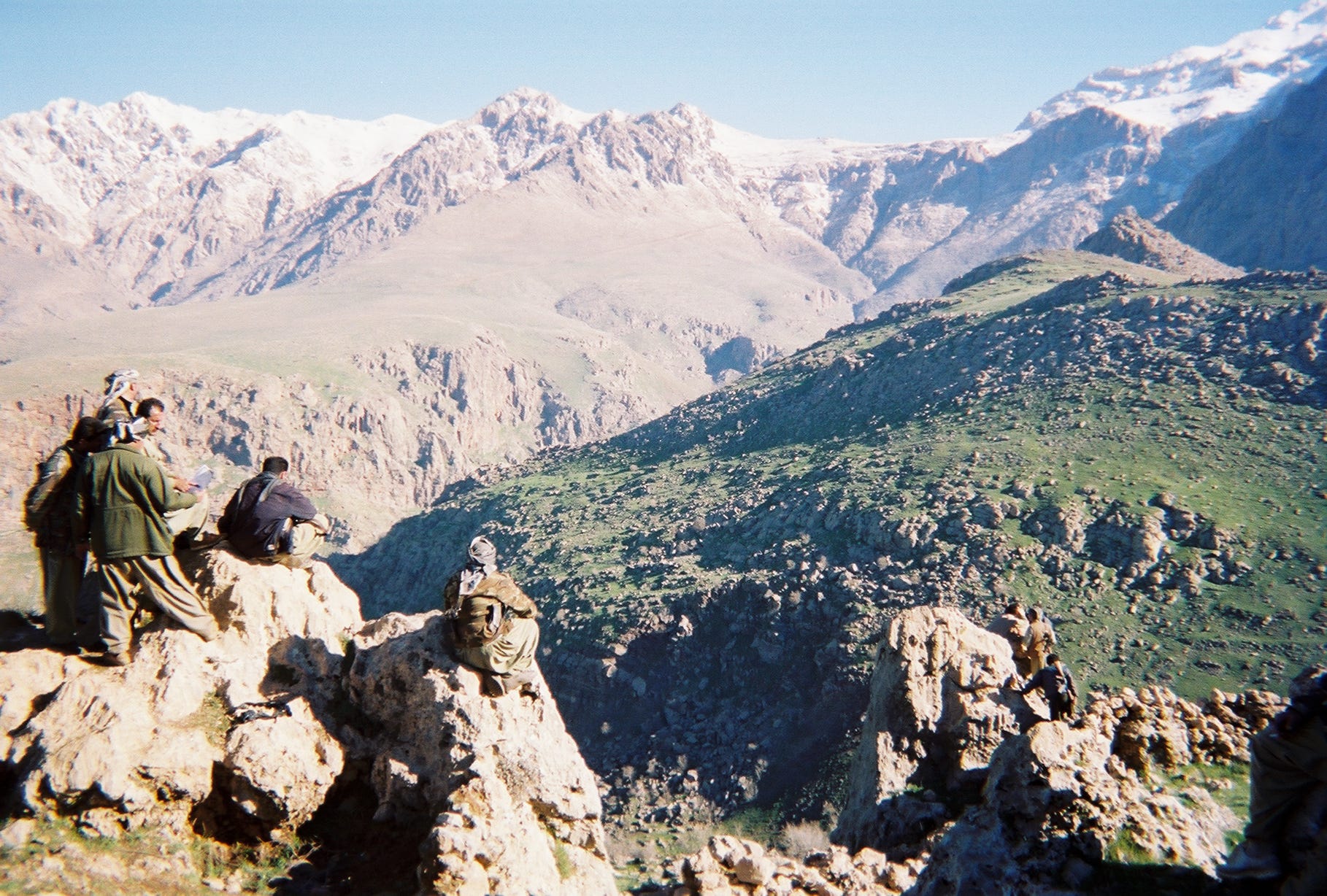
Iraq Kurdish Peshmerga looking toward the Iranian border
The concept of arming indigenous groups is a viable tool in the tool kit of the US government. More specifically, it’s a type of special operation to enable resistance or insurgency in support of US objectives. A more appropriate question is not whether this is a good or bad tool “tool”, but rather is it the right tool in this circumstance. The criteria consist of six questions, the first two of which address appropriateness of a potential partnership while criteria three through six address potential operational capability and effectiveness to accomplish the desired objectives.
1. Does the group have compatible ideology with that of the United States? (is their battlefield conduct acceptable?)
2. Do they have objectives that are compatible with those of the United States? (are they amenable to being part of a future national government or do they expect to be the government, or break away as a new state?)
3. Does the group have competent indigenous leadership?
4. Is there a weakness of government control that will allow for the conduct of expanded resistance or insurgent activity?
5. Is there suitable (restrictive) terrain that would support the conduct of guerrilla activity?
6. Does the supporting population have a strong unified identify that will withstand enemy countermeasures?
With regard to the Kurds, speaking of them like a single entity is like speaking of Northern Americans (Canadians, Americans and Mexicans). Syrian Kurds, Iraqi Kurds, Turkish Kurds and Iranian Kurds, while somewhat culturally similar, are very different groups, and in some cases with distinct languages. In the case of Iranian Kurdish groups, “how will they respond to the “TBD” future government?” The ambiguity of the current situation literally prevents us from asking the right long-term questions. If these criteria are not addressed prior to any policy or operational decisions, the likelihood for unintended long-term consequences increases. Enthusiasm and the desire for short term tactical gains should not overshadow questions about long-term implications.
It’s worth noting, there are multiple Kurdish groups inside Iran, all with disparate experiences and objectives as well as other ethnic separatist movements. These include Ahwazi (Arab) separatist along the border with Iraq, Azeri groups in the north along the border with Azerbaijan and Baluch separatists in the southeast along the border with Pakistan. While these groups do pose a natural problem for the current regime, they do not necessarily translate to a useful course of action for US objectives in the conflict.
There are important limitations to these types of operations. Indigenous groups, whether a resistance movement fighting against an occupier or an insurgency fighting their own government, must have some degree of support from the population to generate any relative advantage and survive. This is particularly relevant when dealing with ethnic militias like the Kurds. Their capabilities will be largely limited to their own ethnic enclaves. Following an influx of support and some operational success, there can be the misperception and temptation (by groups and their sponsors alike) to operate like “mobile infantry”, potentially beyond their traditional territory and areas of popular support. This is what happened in southern Afghanistan in 2001/2002 after the success with the Northern Alliance in the north of the country. A Southern Alliance was somewhat manufactured in a hope of mimicking the success of the Northern Alliance. The results were not good.
Another challenge that this type of operation faces is what to do if somehow a favorable agreement is reached or a more favorable government materializes and the groups you have armed (for the short-term tactical disruption) do not wish to cooperate with that new regime? Said another way, when a government chooses to arm groups, such as insurrectionists or separatists, with the intent of coercing an adversary into compliance, if those conditions are met, but the goals of the insurgent group are still unrealized, it places the operation at odds with policy. This is very different from supporting resistance movements, that share a common goal and political end state, such as the eventual liberation of their nation from an occupier, as is the case with the Russian occupation of Ukrainian territory.
The challenges of this type of special operation are that they are largely unfamiliar to the broader US military and government. As a result, they are more susceptible to being disregarded or prematurely accepted as an option without the requisite analysis. When this occurs, it inevitably sets the execution on a bad trajectory. This in turn can create a negative misperception and bias among decision makers and planners that the “tool” is flawed and not the application or operational concept. In the end, it is a viable and powerful option but it’s not a short-term solution or a panacea. It requires specific conditions, cleared campaign objectives and leaders, planners and operators who all understand and respect the potential, the limitations and the risks.
There is perhaps no better example of this complex dilemma than the famous statement made by Henry Kissinger in 1975. The United States, at the behest of the Shah of Iran, agreed to a request to provide military aid to Kurds in Iraq. Iran’s goal was to put pressure on the Iraqi regime, who was receiving support from the Soviet Union. The US decision was somewhat fueled by a desire to limit Soviet influence in the region. However, a short time later, when Iran signed an agreement with Iraq, the Unites States was essentially forced to cease all support and abandoned the Iraqi Kurds. When asked about the decision, Kissinger coldly noted that “covert action should not be confused with missionary work.” While different audiences will interrupt Kissinger’s remarks as either somewhat morally appalling or politically pragmatic, the more important acknowledgment is the unintended second and third order effects from that endeavor. The abandonment of the Iraqi Kurds (circa 1975) ultimately empowered Saddam Hussein’s rise to power and destabilized the region for roughly the next 40 years.